Recognize confined spaces before entering. Learn the difference between an open rooftop, a roof attic and a permit-required space, and understand atmospheric hazards, isolation, entry roles and emergency planning.
11 planned modules · 26 draft lessons
Course preparation is underway. Planned course price: $59.99 per learner. Enrollment is not open yet.
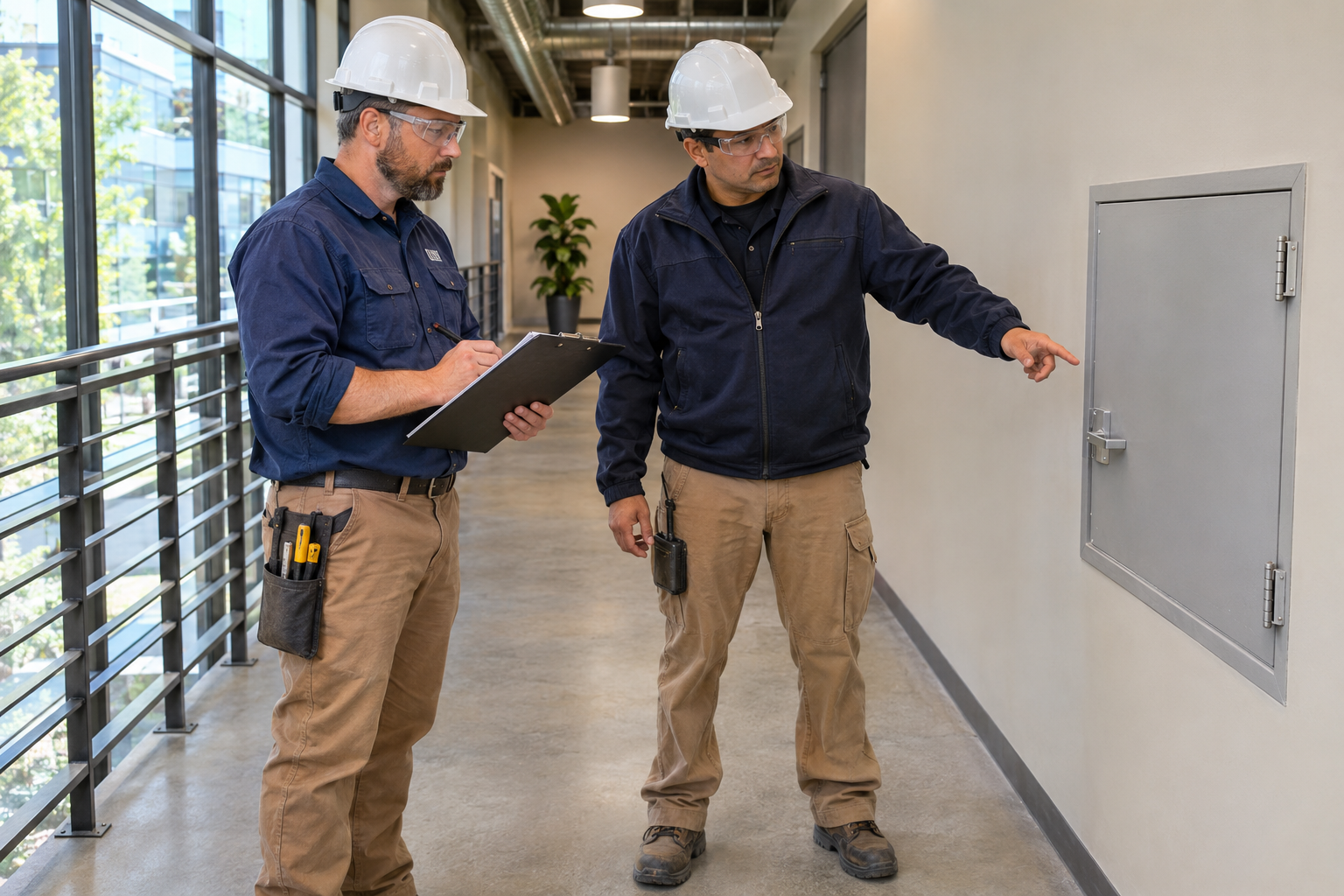
Illustrative planning scene. A photograph cannot establish a space’s classification or authorize entry.
A dedicated roof-attic focus
Recognize the space before entering.
An open rooftop, an attic reached through a hatch, and a mechanical room can present very different hazards. The course explains how configuration, access and the planned work affect the evaluation.
Roof and attic scenarios address heat, restricted exits, electrical services, unsuitable walking surfaces and changes caused by nearby work. Roof-edge and opening protection remain separate safety responsibilities.
Awareness does not authorize entry or rescue.Employers must evaluate the actual space and provide the required role-specific instruction, demonstrated proficiency, procedures, equipment and rescue arrangements before assigning entry duties.
Draft curriculum
11 modules. One essential habit: evaluate first.
Lesson delivery and assessments are being prepared. This is an outline for review.
1
Recognize the space and the work
Use the three-part definition and choose the applicable regulatory framework.
Three questions before entry
Construction and general industry
2
Confined versus permit-required
Recognize permit triggers and understand who evaluates the space.
When a permit-space hazard exists
Evaluation, signs and access control
3
Rooftops, roof attics and crawl spaces
Dedicated roof-access and attic examples, with separate classification and fall-hazard decisions.
Open rooftop versus roof attic
Attic conditions and safe access
4
Atmospheric hazards and testing
Understand oxygen, flammability, toxic exposure and instrument limitations.
An atmosphere can be dangerous without an odor
Sampling and monitoring
5
Isolation, ventilation and equipment
Separate hazard elimination and isolation from controls that must keep operating.
Control hazardous energy and material
Ventilation is not automatic reclassification
6
Entry permit and work release
Understand the permit contents, authorization and cancellation process.
Read the permit before entry
Authorize, suspend or cancel
7
Entrant, attendant and supervisor
Learn the limits of each role and the importance of reliable communication.
Know your assigned role
Entry supervision and handovers
8
Contractors and changing conditions
Coordinate work that can affect the space from outside.
Share information before and after entry
Recognize reasons to leave
9
Rescue and emergency readiness
Prevent impulsive rescue and verify a plan suited to the space.
Rescue must be arranged before entry
Non-entry rescue and difficult openings
10
Employer preparation and assessment
Connect awareness learning to site-specific proficiency and records.
Demonstrate the assigned duties
Records and final review
11
Applied decisions, handoffs and verification
Six workplace cases: identify missing evidence, choose the controlled action and explain the limits of your role.
Classify the attic from evidence, not its name
Understand what the atmospheric instrument cannot prove
Distinguish ventilation from hazard elimination
Coordinate simultaneous work outside the space
Verify rescue availability for the actual opening
Close the permit and use the record to improve the program
Before enrollment
Questions about the course
Are all attics permit-required confined spaces?
No. The configuration must first meet the confined-space definition; hazards then determine permit-space status. The employer must evaluate the actual space and work.
Does this include rooftop and roof-attic work?
Yes. A dedicated module separates open-roof hazards from enclosed under-roof spaces and explains access, heat, services, work changes and emergency-route considerations.
Will completion authorize entry or rescue?
No. This is awareness training. The employer must provide the required role-specific training, proficiency assessment, entry program, equipment and rescue arrangements.
Can I enroll now?
Not yet. This course is in development. Its outline is available for review; the approved planned price is $59.99 per learner. Learner delivery and assessment activation will be completed before enrollment opens.
Source library
Official reference library
Primary OSHA sources used in preparing the curriculum. Construction and general-industry rules differ; the employer must identify applicable requirements and evaluate the actual workplace.