Explore gin-pole and lightweight lifting systems for telecommunications towers and other construction settings. Learn load mechanics, applicable OSHA frameworks, equipment-specific charts, assembly and jumping controls, inspection, work-zone hazards and practical-readiness requirements.
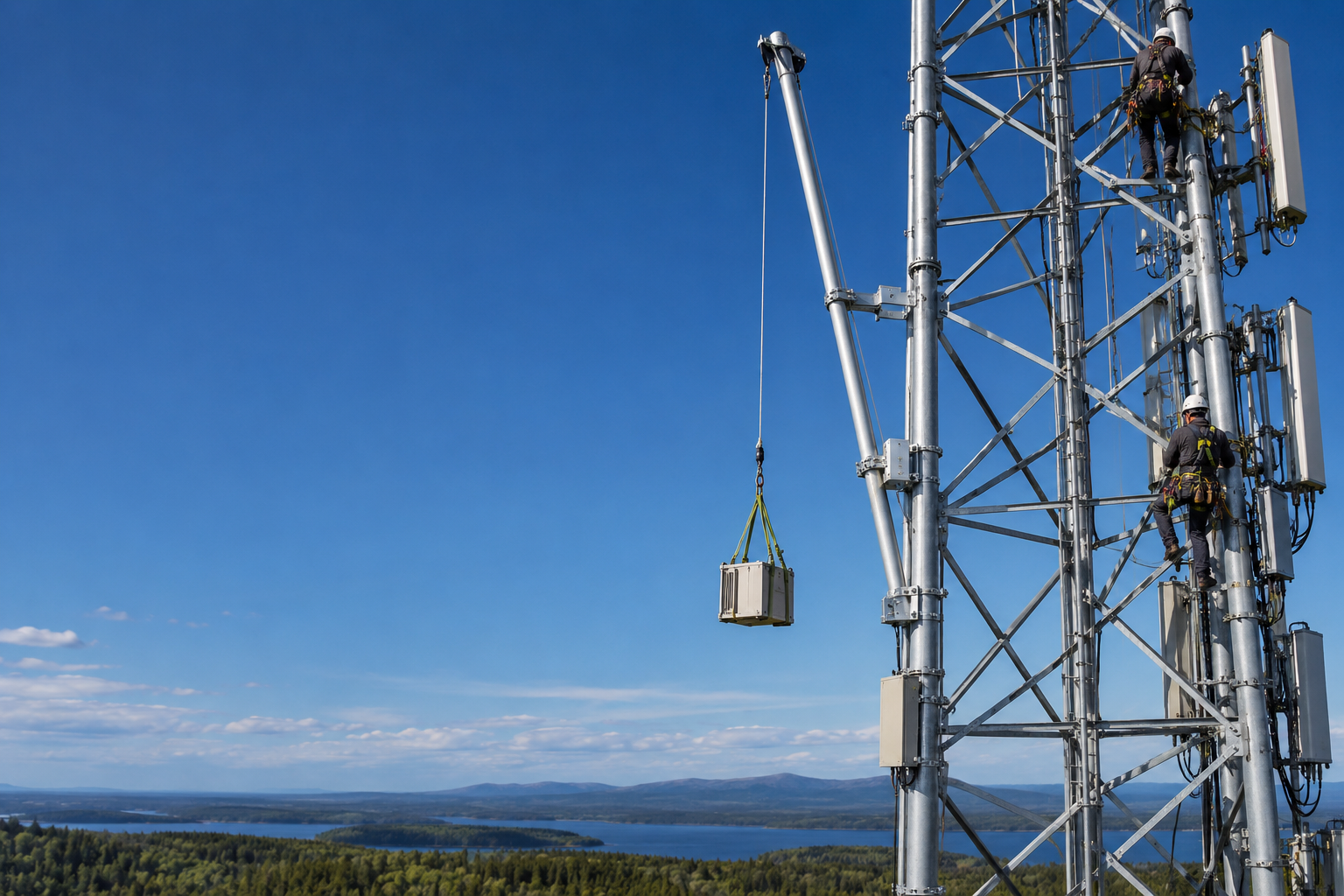
Illustrative field scene. Use current equipment instructions and the employer’s approved lift plan.
Training time~6.8 hours including module checks
Learning contentOSHA and manufacturer-instruction-based awareness
Final assessment10 random questions · bank of 52
Passing attempts3 attempts
LanguagesEnglish and Spanish available · Russian in preparation
CompletionAwareness completion record
Before the lift begins
Verify the system, not just the device.
A gin pole or lifting head is one part of a system. The device, attachment, structure, rigging, load, line path, weather, communication, and landing must be planned together.
This course is designed for understanding—not operating authorization. It does not replace a manufacturer manual, engineering review, practical evaluation, or employer authorization.
Learning outcomes
Recognize what needs to be verified.
1
Identify the system
Separate device types and confirm the current model-specific information.
2
Plan the lift
Verify load, route, roles, weather, exclusion zones, and landing.
3
Inspect and control
Recognize defects, line-of-fire hazards, and stop-work conditions.
4
Understand practical readiness
Know what the employer’s hands-on evaluation must confirm.
Planning tools
Construction Plan Studio
Use the calculator to organize lift-planning notes, load information, roles, and hazards before the qualified person or engineer approves the final plan.
Planning support only. A qualified person or engineer must review the final plan, current conditions, equipment data, and work method.
Course outline
11 modules with 42 lessons, scenario-based planning exercises, module checks, a printable field pack and a final knowledge assessment.
1
1. Scope, roles, and stop-work authority
Set the boundary between online awareness and employer-authorized lifting work.
Awareness is not lifting authorization
Name the people before the load moves
2
2. Which requirements apply?
Separate telecom erection, other construction and general-industry derrick work; assign the right roles.
Telecom towers versus other construction
Competent, qualified and authorized roles
State rules, standards and current documents
3
3. Device types and the complete lifting system
Recognize equipment families and identify the entire load path.
A gin pole is not one universal device
Configuration changes the forces
Monopoles, self-supporting and guyed towers
Rooster head, bridle, basket and jump line
Straight tags, trolley tags and vertical-only charts
Tilted gin poles and vertical configurations
4
4. Load mechanics and rigging fundamentals
Understand why lifted weight alone cannot establish line, block or support capacity.
Line tension, block reaction and overturning
Center of gravity, sling angle and controlled landing
Ropes, blocks, connectors and the hoist
5
5. Pre-lift planning and site controls
Build a documented plan for the load, route, people, weather, and adjacent hazards.
Confirm the load, route, and landing
Weather, power, and changing conditions
Load-chart clinic: conflicting ratings and gross load
Primary structure and redundant rigging
Engineered lifts and approval boundaries
6
6. Assembly, inspection, and removal from service
Inspect equipment and verify the approved configuration before a controlled test movement.
Inspect the device and every connection
Assemble exactly as approved
Pipe fit, sleeves and shackle seating
Proof testing and operational testing
Evaluating an existing or used gin pole
7
7. Assembly, jumping and release to service
Use approved stages and hold points; never improvise a universal gin-pole assembly sequence.
Site preparation and temporary stability
Assembly, jumping and dismantling hold points
Testing: do not mix different percentages
Vertical track poles and guided jumping
8
8. Controlled lifting and line-of-fire awareness
Maintain control during movement, landing, shutdown, and abnormal conditions.
Move deliberately and communicate clearly
Respond without creating another hazard
9
9. Work-zone controls and incident lessons
Integrate communication, electricity, RF, weather and rescue with practical stop-work decisions.
Signals, blind lifts and exclusion zones
Electrical lines, RF, weather and rescue
Incident review and final planning exercise
10
10. Practical evaluation, records, and final review
Understand the employer’s practical evaluation and what the online record means.
Practical authorization is separate
Know what the completion record means
Inspection logs, retention and return to service
11
Applied field decisions and evidence review
Work through six realistic decisions, explain the missing evidence, and verify the release conditions.
Build a configuration evidence packet
Understand forces without treating a sketch as a design
Treat support and attachment as separate checks
Use hold points during assembly and jumping
Prepare a landing, not just a lift
Separate material lifting from personnel access
Source library
Official reference library
Vendor-neutral learning content based on supplied device documentation and official OSHA and industry references. Always use the current approved manual and chart for the actual unit.
01 · osha.gov
OSHA: Communication Towers — Compliance Assistance